
Westside International — Building Something Bigger Than a Project
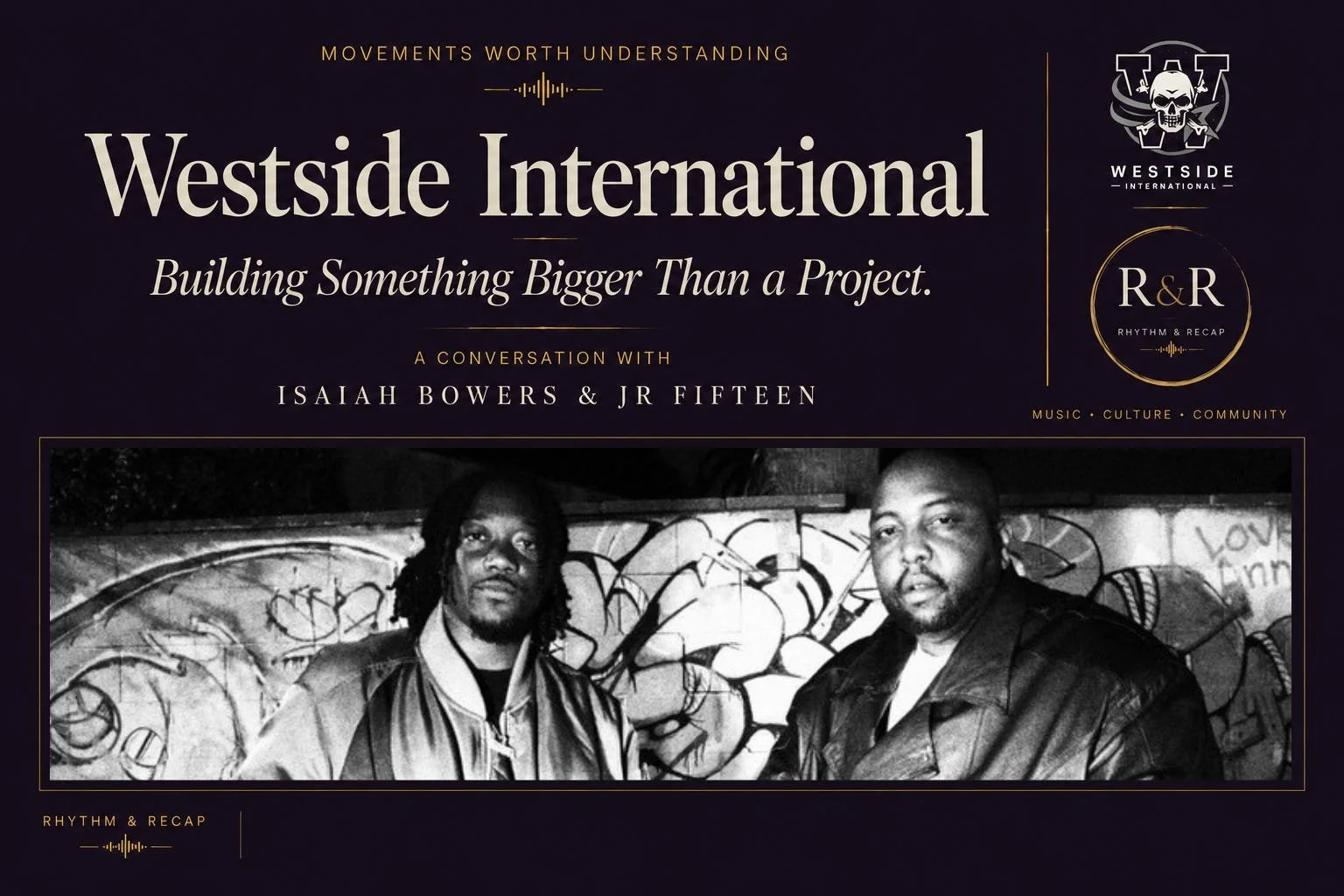
Isaiah Bowers (left) and JR Fifteen (right), co-founders of Westside International, photographed in Los Angeles. What began as a creative partnership has grown into a movement rooted in music, community, and long-term vision.
Documenting a Movement While It's Still Being Built
Archive Feature
By Crystani Freeman
Published
July 29, 2026
Movement
Westside International
Category
Movement Profile
Location
Los Angeles, CA
Creative Home
The Gage Cage
Some movements begin with a launch.
This one began with two people meeting through a program built for something else entirely, and realizing, almost by accident, that they were building toward the same future.
What Is Westside International?
Westside International is a Los Angeles-based creative movement founded by Isaiah Bowers and JR Fifteen. Music is its most visible output, but it isn’t a recording partnership in the traditional sense. It’s a shared philosophy about how to build. Authenticity, ownership, creative freedom, and representing the Westside with intention sit underneath everything the movement puts out.
Rather than two individual careers that happen to intersect, Isaiah and JR are constructing something closer to an ecosystem: music, visuals, storytelling, and identity, all reinforcing the same idea. The work starts in Los Angeles. The vision doesn’t stop there.
Where It Began
Isaiah Bowers, known to listeners as Zay Suave and repping Leimert Park, and JR Fifteen, repping South Central, met through a music and mental health program, not a studio session or an industry introduction. Different corners of the Westside, different entry points into music, but the connection moved fast. Within roughly a month, the two had written and recorded Summer Suave, a project of around twenty songs made in a short, intense creative burst.
What could have ended there didn’t. The chemistry the project revealed was strong enough that neither wanted to let it go when the songs were finished. Westside International became the name for everything that came after, the container big enough to hold what they were actually trying to build.
That building happens at The Gage Cage, the pair’s creative home base. It functions less like a studio and more like a workshop, a space where recording, planning, and disagreement all happen in the same room. Understanding Westside International means understanding that the room is part of the story, not just the backdrop to it.
Philosophy
Authenticity comes first, and it isn’t treated as a talking point. Across their conversations, Isaiah and JR return again and again to the same idea: show up as yourself, don’t perform an identity for an audience. Labels matter less than honesty. Categories matter less than purpose.
Ownership runs alongside it: ownership of the music, the story, the direction. Rather than waiting for permission to define themselves, Westside International sets its own terms from the outset, treating that as infrastructure rather than branding.
And the partnership doesn’t pretend to be frictionless. Isaiah and JR talk openly about disagreement, not as something to smooth over, but as a working part of how the music gets made. Ideas get challenged. Opinions collide. The goal was never agreement for its own sake; it’s making the strongest possible work, even when that takes an uncomfortable conversation to get there.
Impact
The name is easy to misread. “International” sounds like it’s pointing outward, away from home. It isn’t. Westside International starts local by design. The goal was never to leave Los Angeles behind, but to build something real enough there that it could eventually travel. Growth, in their framing, isn’t about audience size so much as carrying the same values into whatever comes next.
That’s also where Summer Suave earns a second look. On the surface, it’s the project that started things. Underneath, it’s proof that two artists with different instincts could build something neither would have built alone, and that leaning into momentum and trust over overthinking is exactly the tone that would go on to define everything after it.
That local-first foundation is already showing signs of the reach the name promises. The movement has picked up attention not just across Los Angeles, but in Las Vegas and Houston as well. And the influences feeding it stay just as specific as the neighborhoods they come from. Isaiah points to faith, everyday life on the Westside, and an ongoing pull toward greatness. JR’s sound leans into a nostalgic register shaped by Dr. Dre and The Neptunes, filtered through the storytelling instincts of anime like One Piece, a reference that shows up again in Grand Line, one of his more recent releases.
Cultural Significance
Every city has artists. Every city has music being made this week that nobody outside a few group chats will ever hear. Movements, the kind built with an actual philosophy underneath them, are rarer, and harder to see while they’re still forming.
I think that’s what makes Westside International worth documenting now rather than later: it isn’t waiting on recognition to already be clear about what it’s building, or why. That clarity usually shows up in interviews only after success forces someone to explain themselves. Here, it came first.
Why Rhythm & Recap Covered This
Most attention arrives after a movement has already gained enough momentum to demand it, and by then, the early thinking is usually gone, flattened into a sentence or two: they came up together, they released a project, they built a following.
Rhythm & Recap exists to catch what happens before that flattening: the conversations, the disagreements, the space where the work actually gets made. Westside International is one of the first entries in that archive, and a clear example of why the series exists. Not to introduce a movement after it’s arrived, but to document one while it’s still being built.
Milestones
Meeting: Isaiah Bowers and JR Fifteen connect through a shared music and mental health program
~1 month later: Summer Suave is written and recorded — approximately 20 songs
Ongoing: Westside International forms as the shared name and vision for what continues beyond the project
Creative home: The Gage Cage, functioning as both recording space and working headquarters
Catalog: Have a Great Summer (2024), Summer Suave (2025), Grand Line (2026), plus singles including “Thriller Bark” and “MarineFord”
Reach: Momentum building beyond Los Angeles, into Las Vegas and Houston
Ahead: Future releases, collaborations, and expanded reach — while staying rooted in the Westside
Series: Movements Worth Understanding Movement: Westside International Founders: Isaiah Bowers, JR Fifteen Location: Los Angeles, California Creative Home: The Gage Cage Date: 2026
Movements Worth Understanding is a Rhythm & Recap series documenting the creative movements shaping music and culture, not after they’ve gained recognition, but while they’re still being built. Some stories deserve more than a headline. This series exists to give them the context they deserve.
Continue the Conversation
If this piece leaves you curious about Westside International, a good place to start is Summer Suave, the project that started it all, followed by Grand Line, one of their more recent releases. Together they trace the arc from where the movement began to where it’s headed.
To keep up with Westside International, follow @zaysuave, @jrfifteen, and @westsideinternational on Instagram.
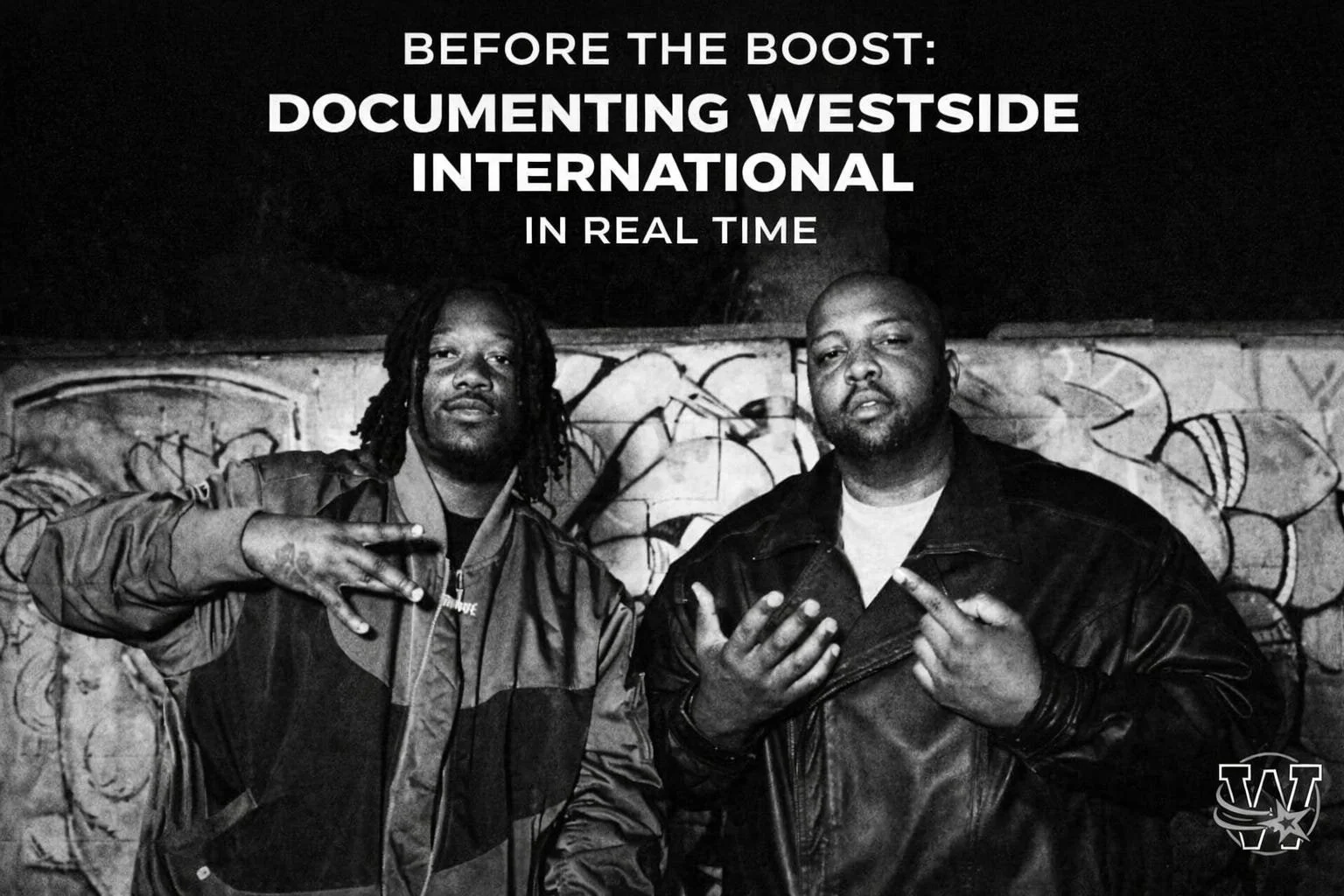
Isaiah Bowers (left) and JR Fifteen (right). Behind every movement are people willing to build long before anyone is paying attention.
Continue the Archive
Making of Westside International
Go behind the movement through a teaser documenting the conversations, vision, and creative foundation that shaped Westside International.
Explore the Music
Start with Summer Suave, then continue through Grand Line to experience the evolution of the movement.
Related Archive

Rhythm & Recap
Rhythm & Recap is an independent editorial archive documenting the people, communities, and conversations shaping music and culture.
