
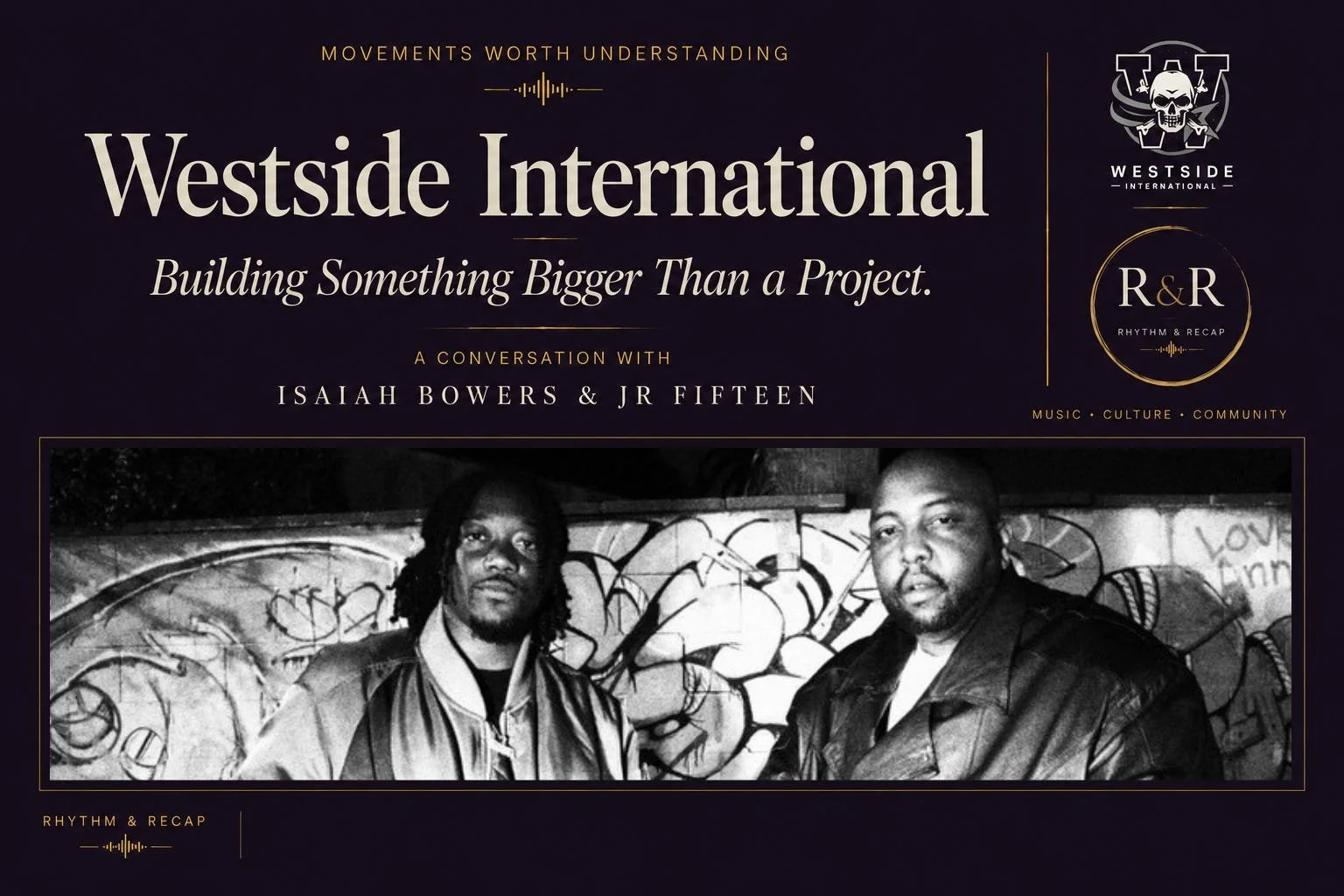
Westside International — Building Something Bigger Than a Project
Before movements become headlines, they begin with shared ideas, creative trust, and a vision that few people can yet see. This archive feature documents Westside International while the movement is still taking shape.
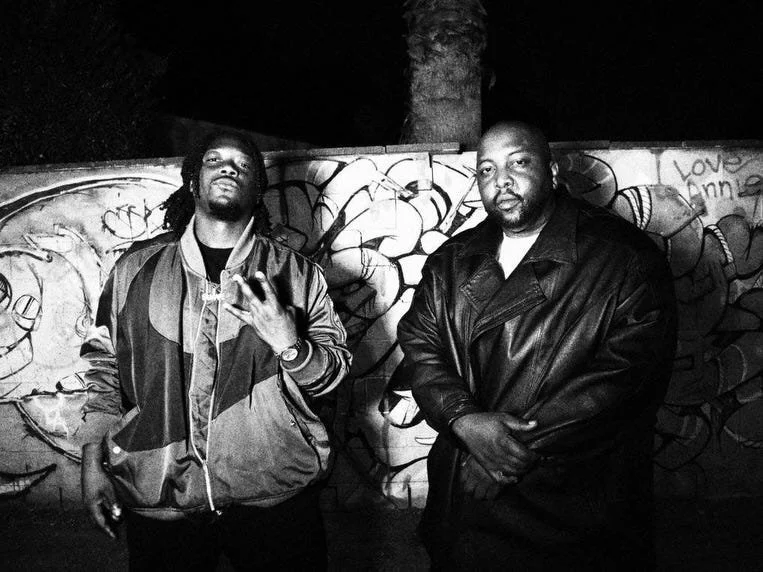
Isaiah Bowers (left) and JR Fifteen (right), co-founders of Westside International, photographed in Los Angeles. What began as a creative partnership has grown into a movement rooted in music, community, and long-term vision.
Documenting a Movement While It's Still Being Built
Archive Feature
By Crystani Freeman
Published
July 29, 2026
Movement
Westside International
Category
Movement Profile
Location
Los Angeles, CA
Creative Home
The Gage Cage
Some movements begin with a launch.
This one began with two people meeting through a program built for something else entirely, and realizing, almost by accident, that they were building toward the same future.
What Is Westside International?
Westside International is a Los Angeles-based creative movement founded by Isaiah Bowers and JR Fifteen. Music is its most visible output, but it isn’t a recording partnership in the traditional sense. It’s a shared philosophy about how to build. Authenticity, ownership, creative freedom, and representing the Westside with intention sit underneath everything the movement puts out.
Rather than two individual careers that happen to intersect, Isaiah and JR are constructing something closer to an ecosystem: music, visuals, storytelling, and identity, all reinforcing the same idea. The work starts in Los Angeles. The vision doesn’t stop there.
Where It Began
Isaiah Bowers, known to listeners as Zay Suave and repping Leimert Park, and JR Fifteen, repping South Central, met through a music and mental health program, not a studio session or an industry introduction. Different corners of the Westside, different entry points into music, but the connection moved fast. Within roughly a month, the two had written and recorded Summer Suave, a project of around twenty songs made in a short, intense creative burst.
What could have ended there didn’t. The chemistry the project revealed was strong enough that neither wanted to let it go when the songs were finished. Westside International became the name for everything that came after, the container big enough to hold what they were actually trying to build.
That building happens at The Gage Cage, the pair’s creative home base. It functions less like a studio and more like a workshop, a space where recording, planning, and disagreement all happen in the same room. Understanding Westside International means understanding that the room is part of the story, not just the backdrop to it.
Philosophy
Authenticity comes first, and it isn’t treated as a talking point. Across their conversations, Isaiah and JR return again and again to the same idea: show up as yourself, don’t perform an identity for an audience. Labels matter less than honesty. Categories matter less than purpose.
Ownership runs alongside it: ownership of the music, the story, the direction. Rather than waiting for permission to define themselves, Westside International sets its own terms from the outset, treating that as infrastructure rather than branding.
And the partnership doesn’t pretend to be frictionless. Isaiah and JR talk openly about disagreement, not as something to smooth over, but as a working part of how the music gets made. Ideas get challenged. Opinions collide. The goal was never agreement for its own sake; it’s making the strongest possible work, even when that takes an uncomfortable conversation to get there.
Impact
The name is easy to misread. “International” sounds like it’s pointing outward, away from home. It isn’t. Westside International starts local by design. The goal was never to leave Los Angeles behind, but to build something real enough there that it could eventually travel. Growth, in their framing, isn’t about audience size so much as carrying the same values into whatever comes next.
That’s also where Summer Suave earns a second look. On the surface, it’s the project that started things. Underneath, it’s proof that two artists with different instincts could build something neither would have built alone, and that leaning into momentum and trust over overthinking is exactly the tone that would go on to define everything after it.
That local-first foundation is already showing signs of the reach the name promises. The movement has picked up attention not just across Los Angeles, but in Las Vegas and Houston as well. And the influences feeding it stay just as specific as the neighborhoods they come from. Isaiah points to faith, everyday life on the Westside, and an ongoing pull toward greatness. JR’s sound leans into a nostalgic register shaped by Dr. Dre and The Neptunes, filtered through the storytelling instincts of anime like One Piece, a reference that shows up again in Grand Line, one of his more recent releases.
Cultural Significance
Every city has artists. Every city has music being made this week that nobody outside a few group chats will ever hear. Movements, the kind built with an actual philosophy underneath them, are rarer, and harder to see while they’re still forming.
I think that’s what makes Westside International worth documenting now rather than later: it isn’t waiting on recognition to already be clear about what it’s building, or why. That clarity usually shows up in interviews only after success forces someone to explain themselves. Here, it came first.
Why Rhythm & Recap Covered This
Most attention arrives after a movement has already gained enough momentum to demand it, and by then, the early thinking is usually gone, flattened into a sentence or two: they came up together, they released a project, they built a following.
Rhythm & Recap exists to catch what happens before that flattening: the conversations, the disagreements, the space where the work actually gets made. Westside International is one of the first entries in that archive, and a clear example of why the series exists. Not to introduce a movement after it’s arrived, but to document one while it’s still being built.
Milestones
Meeting: Isaiah Bowers and JR Fifteen connect through a shared music and mental health program
~1 month later: Summer Suave is written and recorded — approximately 20 songs
Ongoing: Westside International forms as the shared name and vision for what continues beyond the project
Creative home: The Gage Cage, functioning as both recording space and working headquarters
Catalog: Have a Great Summer (2024), Summer Suave (2025), Grand Line (2026), plus singles including “Thriller Bark” and “MarineFord”
Reach: Momentum building beyond Los Angeles, into Las Vegas and Houston
Ahead: Future releases, collaborations, and expanded reach — while staying rooted in the Westside
Series: Movements Worth Understanding Movement: Westside International Founders: Isaiah Bowers, JR Fifteen Location: Los Angeles, California Creative Home: The Gage Cage Date: 2026
Movements Worth Understanding is a Rhythm & Recap series documenting the creative movements shaping music and culture, not after they’ve gained recognition, but while they’re still being built. Some stories deserve more than a headline. This series exists to give them the context they deserve.
Continue the Conversation
If this piece leaves you curious about Westside International, a good place to start is Summer Suave, the project that started it all, followed by Grand Line, one of their more recent releases. Together they trace the arc from where the movement began to where it’s headed.
To keep up with Westside International, follow @zaysuave, @jrfifteen, and @westsideinternational on Instagram.
Isaiah Bowers (left) and JR Fifteen (right). Behind every movement are people willing to build long before anyone is paying attention.
Continue the Archive
Making of Westside International
Go behind the movement through a teaser documenting the conversations, vision, and creative foundation that shaped Westside International.
Explore the Music
Start with Summer Suave, then continue through Grand Line to experience the evolution of the movement.
Related Archive
Rhythm & Recap
Rhythm & Recap is an independent editorial archive documenting the people, communities, and conversations shaping music and culture.
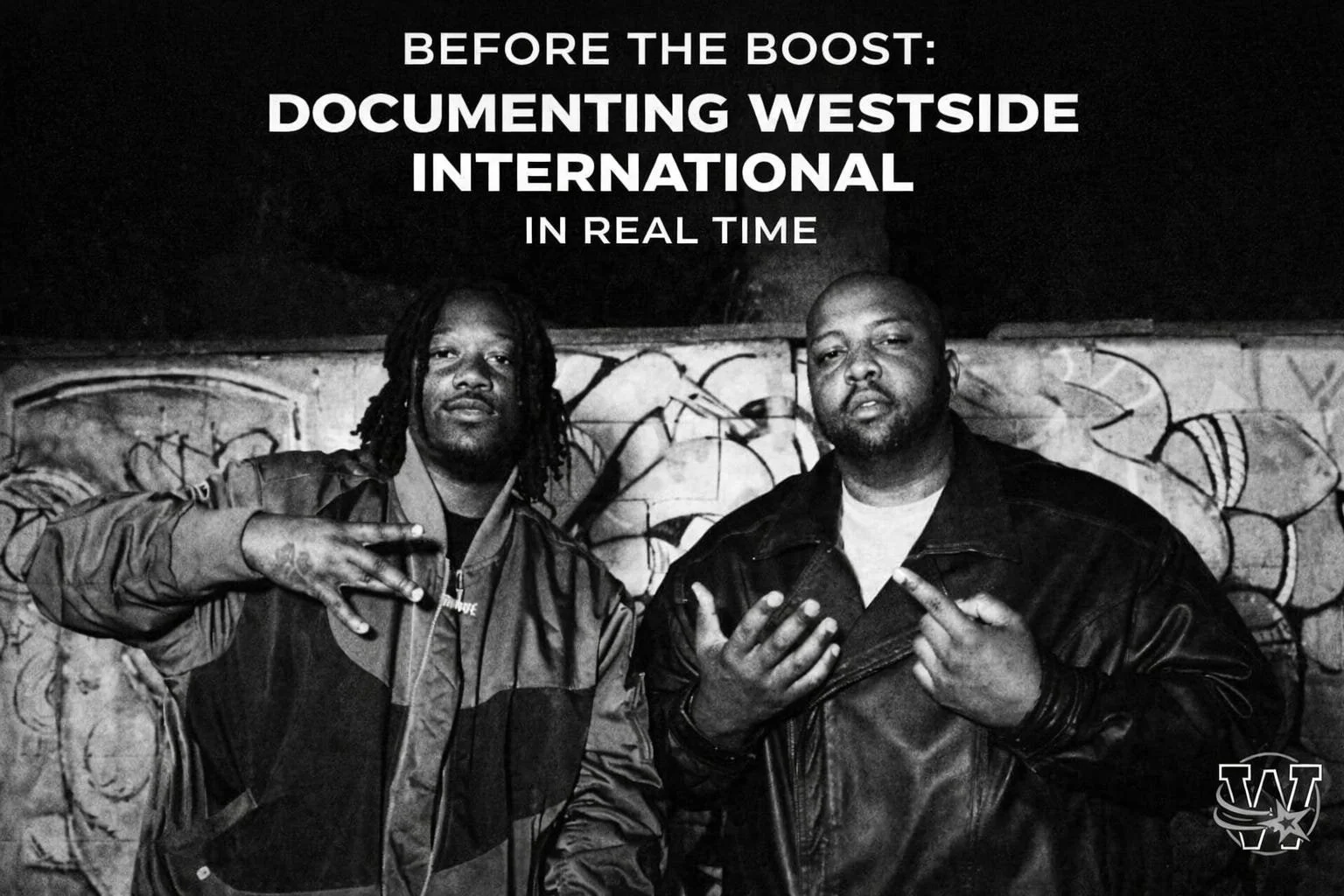
Westside International — Before the Boost
What does it look like to document a movement before the momentum, before the headlines, and before the story becomes simplified? This archive feature follows Westside International as its philosophy, community, and creative identity take shape in real time.
Editorial illustration created for Rhythm & Recap, inspired by Westside International's creative ecosystem and The Gage Cage in South Los Angeles.
Documenting a Movement While It's Still Forming
Archive Feature
By Crystani Freeman
Published
April 23, 2026
Collective
Westside International
Category
Case Study
Location
The Gage Cage • South Los Angeles
Before Visibility. Before Momentum. Before the Story Gets Simplified.
In December 2025, I began documenting Westside International during a rare window of time.
Not after a breakout.
Not after the headlines.
While the movement was still being built.
The intention wasn't to document a release cycle or promote a project.
It was to preserve the ideas, relationships, and philosophies taking shape before wider recognition.
The Objective
Document Westside International during a rare window.
Before visibility.
Before momentum peaks.
Before the story gets simplified.
This wasn't about promoting artists.
It was about preserving a movement while it was still becoming.
The focus was to document:
The philosophy behind the movement
The structure Isaiah Bowers and JR15 are building
The creative chemistry between collaborators
The world taking shape inside The Gage Cage
The signals of a future West Coast lineage
Instead of waiting for recognition, the goal was to archive what already existed.
The Approach
This wasn't traditional coverage.
It unfolded as a multi-part editorial series, documenting the movement as it evolved.
Each feature explored a different layer of the ecosystem.
The World
The Gage Cage.
A creative home.
A studio.
A meeting place.
A vision hub.
The Origin Story
How Isaiah Bowers and JR15 met.
Why Summer Suave mattered.
How shared values became shared purpose.
Creative Chemistry
The conversations.
The disagreements.
The trust.
The creative process behind collaboration.
Cultural Flashbacks
Looking back at Summer Suave.
Twenty songs.
One month.
A season that helped define the movement's identity.
Sonic DNA
West Coast lineage.
Early 2000s influences.
A sound that feels familiar without feeling nostalgic.
Identity & Naming
The stories behind Fly.
JR15.
Isaiah Bowers.
How names become identity.
Philosophy
Belonging.
Visibility.
Freedom of expression.
The emotional foundation underneath the music.
What's Next
Looking toward the Grand Line.
A vision that extends far beyond Los Angeles.
The Outcome
What began as documentation became an archive.
The work:
Positioned Westside International as a movement with depth and intention
Established The Gage Cage as a central creative space
Preserved values, not just releases
Created an entry point into an evolving ecosystem
Captured language, references, and early community culture
The moments most likely to disappear became part of the record.
Creative debates.
Humor.
Vision.
Inside terminology.
Community dynamics.
Isaiah Bowers and JR15 weren't simply documented as artists.
They were documented as architects of something still taking shape.
What This Reinforced
This project reinforced something central to Rhythm & Recap's philosophy:
Movements deserve to be documented before they become headlines.
When communities are archived while they're still forming, their ideas, language, and intentions remain part of the historical record rather than being rewritten after success.
Why This Matters for Rhythm & Recap
This feature reflects Rhythm & Recap's editorial approach:
Documenting movements while they're still evolving
Preserving creative ecosystems, not just individual moments
Creating long-form records that give audiences context, not simply content
Building cultural memory before the wider spotlight arrives
It's not about chasing what's already popular.
It's about recognizing what's already meaningful.
At a Glance
Creative movements deserve documentation before recognition
Long-form storytelling preserves context that social media often loses
Communities are built through shared philosophy as much as shared music
Documentation can become cultural record
Early stories shape lasting legacies
Continue the Archive
The Making of Westside International
Go behind the movement with a teaser exploring how Westside International came together.
Editorial Series
Explore the complete Westside International archive, including conversations, reflections, and related features.
Related Archive
Rhythm & Recap
Rhythm & Recap is an independent editorial archive documenting the people, communities, and conversations shaping music and culture.
Bazz Davis — House Call
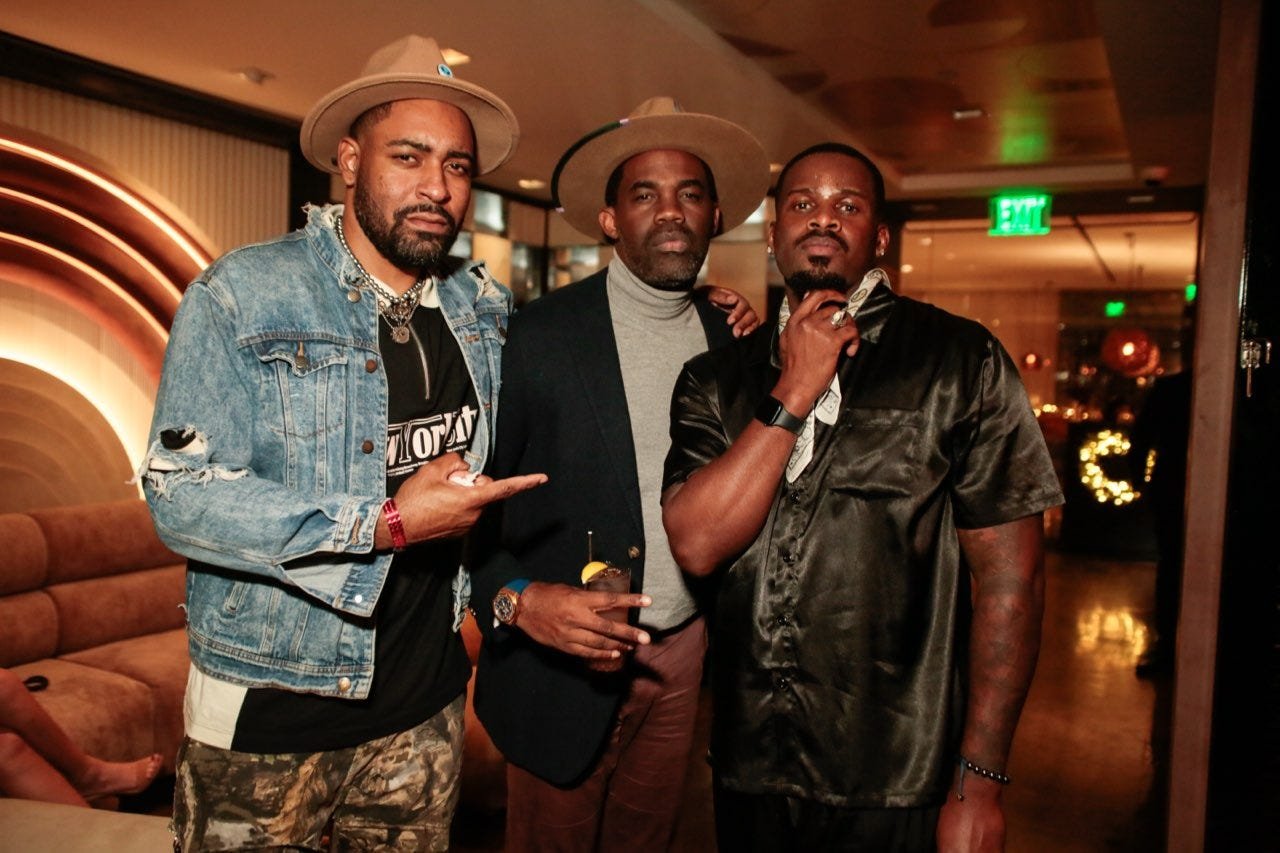
Some performances end when the lights come up. Others become something people continue carrying with them. A reflection on how Bazz Davis' House Call transformed one night into a living community experience.

Bazz Davis performing live during House Call at Sofitel Los Angeles (12.28.25).
Where the Music Lives: Inside Bazz Davis' House Call Experience
A reflection on community, intentionality, and the moments that stay with you.
Archive Feature
By Crystani Freeman
Published
April 9, 2026
Artist
Bazz Davis
Series
House Call
Category
Community Feature
Location
Sofitel Los Angeles
There are some nights that feel like more than just a show.
Not because of the venue.
Not because of who’s in the room.
But because of what’s being built in real time.
That’s what House Call felt like.
Back in December, I had the chance to experience Bazz Davis live at Sofitel Los Angeles. And even now, months later, it’s still sitting with me, not as a moment that passed, but as something that’s continuing to grow.
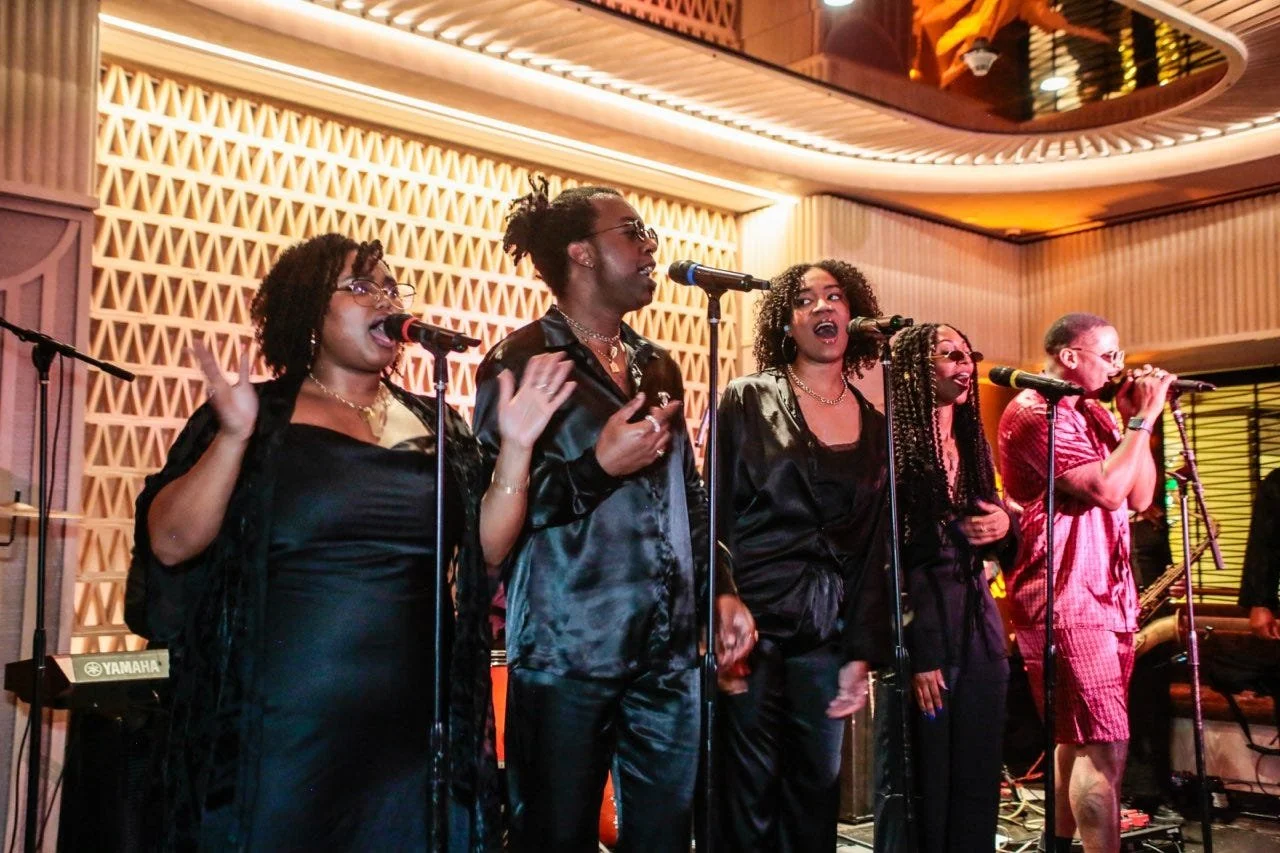
Bazz Davis on stage with background vocalists Aankha Neal, James Eric Barmore Jr., Casey Broussard, and Mycala Baker.
From the second I walked in, the energy felt intentional.
Not overly produced.
Not forced.
Just aligned.
You could feel it in the way people moved, in the way the band interacted, in the way the room slowly filled with people who weren’t just there to watch, they were there to be part of it.
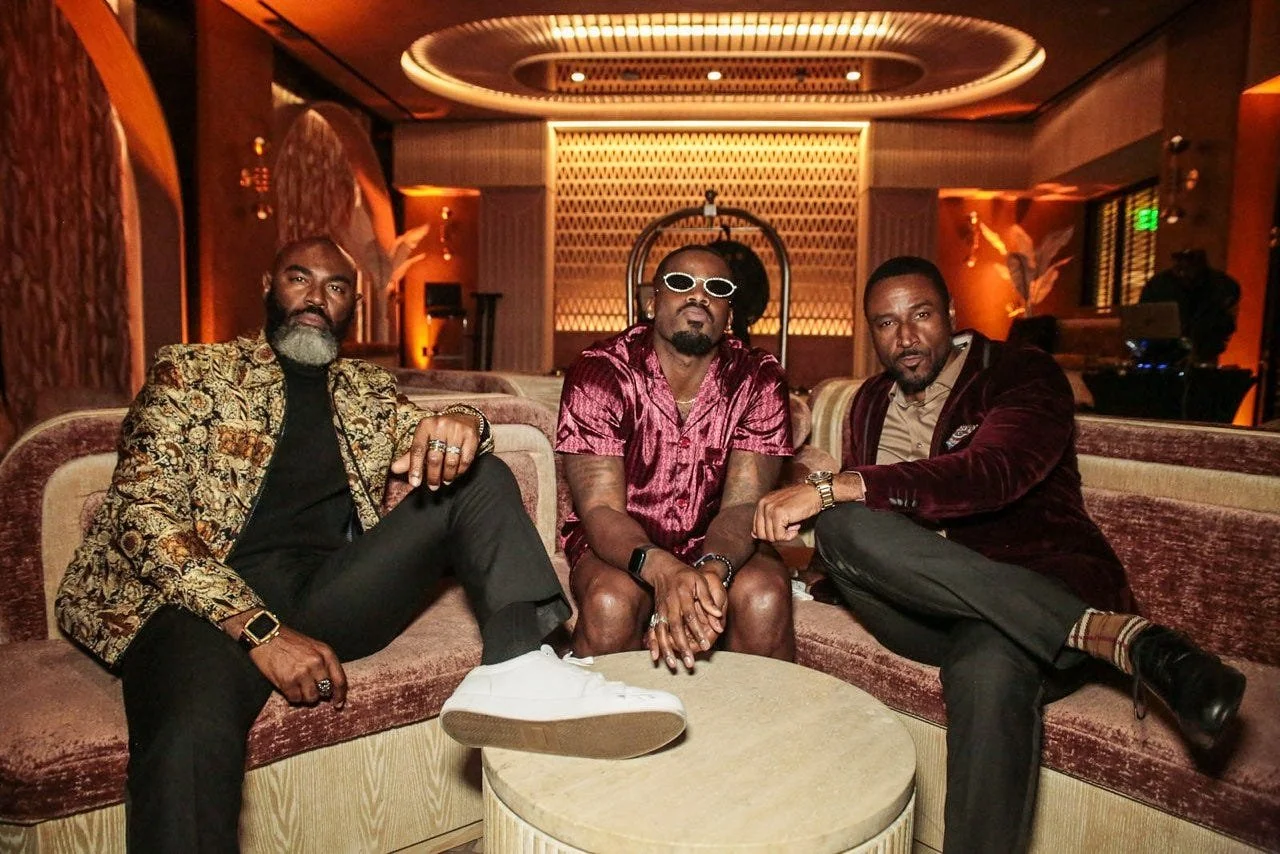
Bazz Davis pictured with Dimitryl Loiseau and Karmel Humphrey from REGARD The Agency, supporting the creative direction and execution of the evening.
And that distinction matters.
Because House Call isn’t just about performing.
It’s about creating a space where people feel connected to the music, to each other, and to something bigger than themselves.
What stood out most
There was a moment during the night where everything clicked.
A proposal happened on stage.
The band celebrated a birthday.
People who knew each other, and people who didn’t, were all sharing the same energy.

Bazz Davis’ bandmate Muze Sanchez proposes to his girlfriend, Brittney, during the performance.
It didn’t feel like a production.
It felt like community.
And when I asked Bazz how he felt after the show, his answer reflected that same intention:
“A lot of love, a lot of intentionality… just natural things that fell together.”

Bazz Davis shares a moment with bandmates Muze Sanchez and Ty Anderson, joined by photographer Chlorine Kogan, during a post-show toast.
That word, intentionality, kept coming up.
Not just in what he said, but in how the entire night unfolded.
The bigger picture
What Bazz is building with House Call goes beyond music.
It’s about:
consistency
presence
real connection
Even when I asked him what he’d tell his future self, it wasn’t about numbers or milestones.
It was simple:
“Show up. Show up and keep going.”
Why this matters (now more than ever)
Since that night, House Call has continued.
More shows.
More moments.
More people becoming part of what’s being built.
And that’s why this doesn’t feel like something in the past.
It feels like something in motion.
Because spaces like this, where artists are intentional, where community is present, and where the experience actually means something, are rare.
And they’re worth documenting.

Bazz Davis pictured with members of his community and supporters following the show.
Final note
This wasn’t just a performance.
It was a reminder:
Before music becomes content.
Before artists become headlines.
Before moments become memories...
They live somewhere first.
And for Bazz Davis and House Call,
that place is still being built in real time.
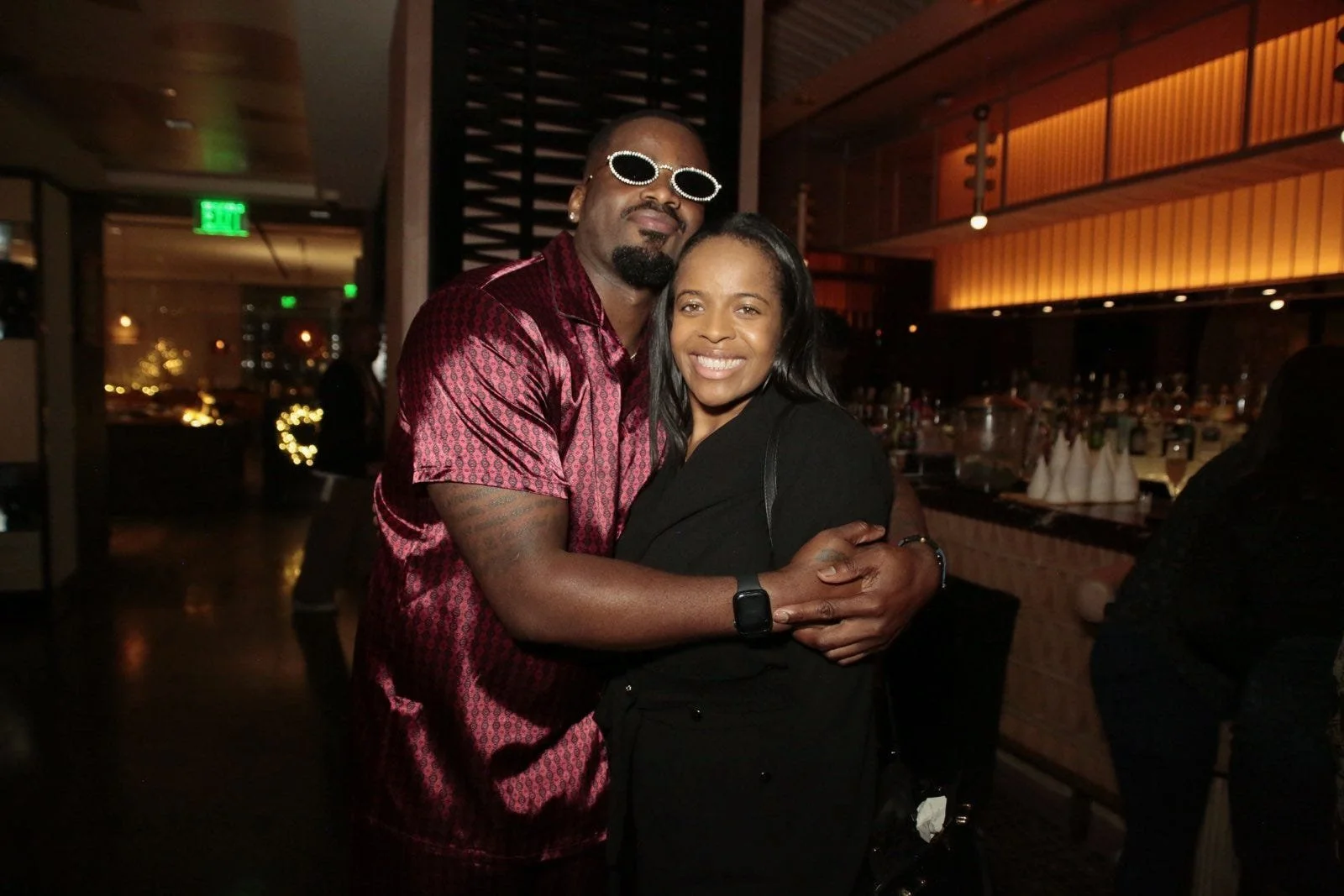
Bazz Davis pictured with Crystani Freeman, the founder of Rhythm & Recap.
Conversation
Conversation
Go behind the story with the full Rhythm & Recap interview.
Watch Visual Recap
Revisit the visual recap from House Call.
Related Archive
Rhythm & Recap
Rhythm & Recap is an independent editorial archive documenting the people, communities, and conversations shaping music and culture.
UraelB — Before the Boost
What happens when a single performance becomes the beginning of a story? This archive feature explores how documenting UraelB over time transformed one live show into a lasting editorial record.
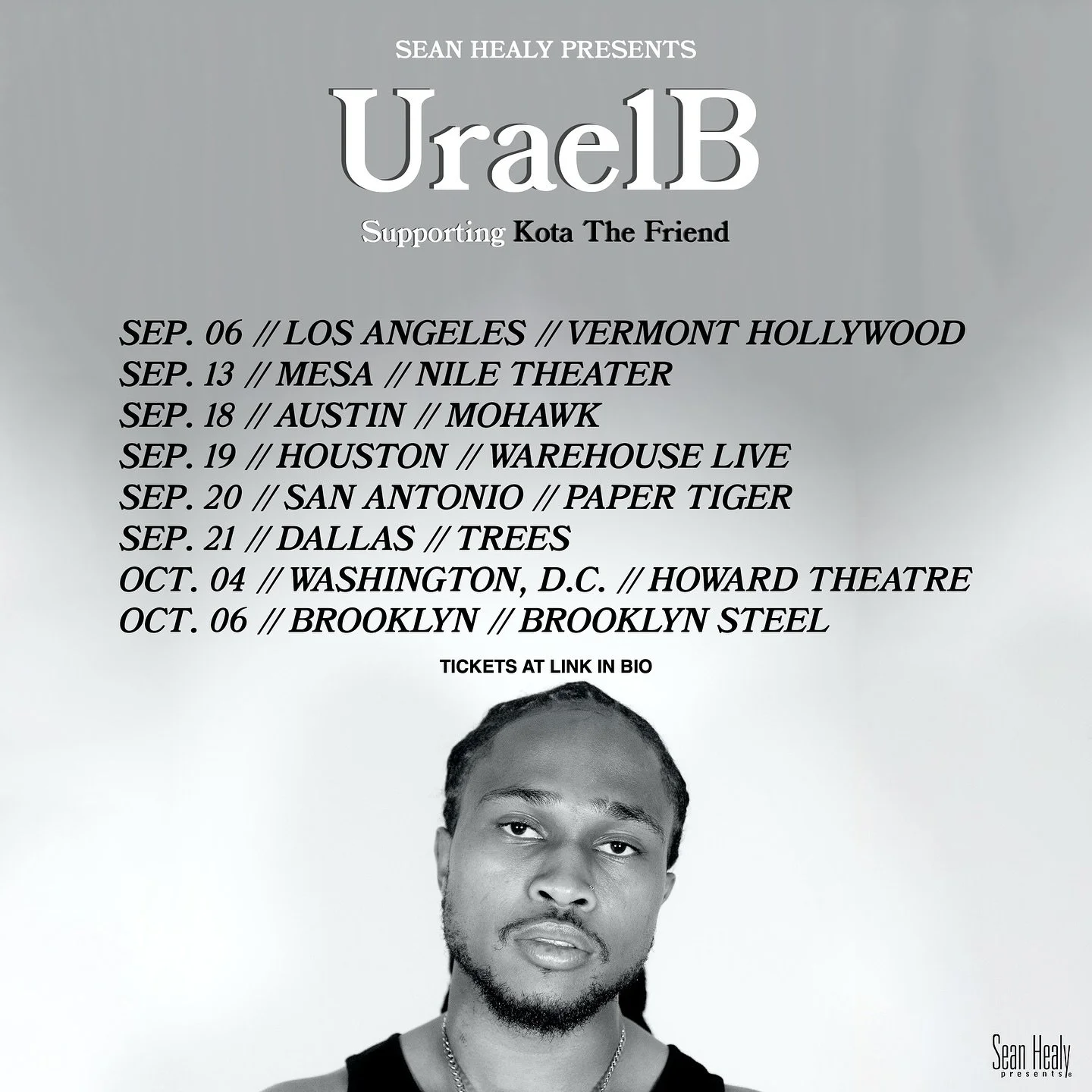
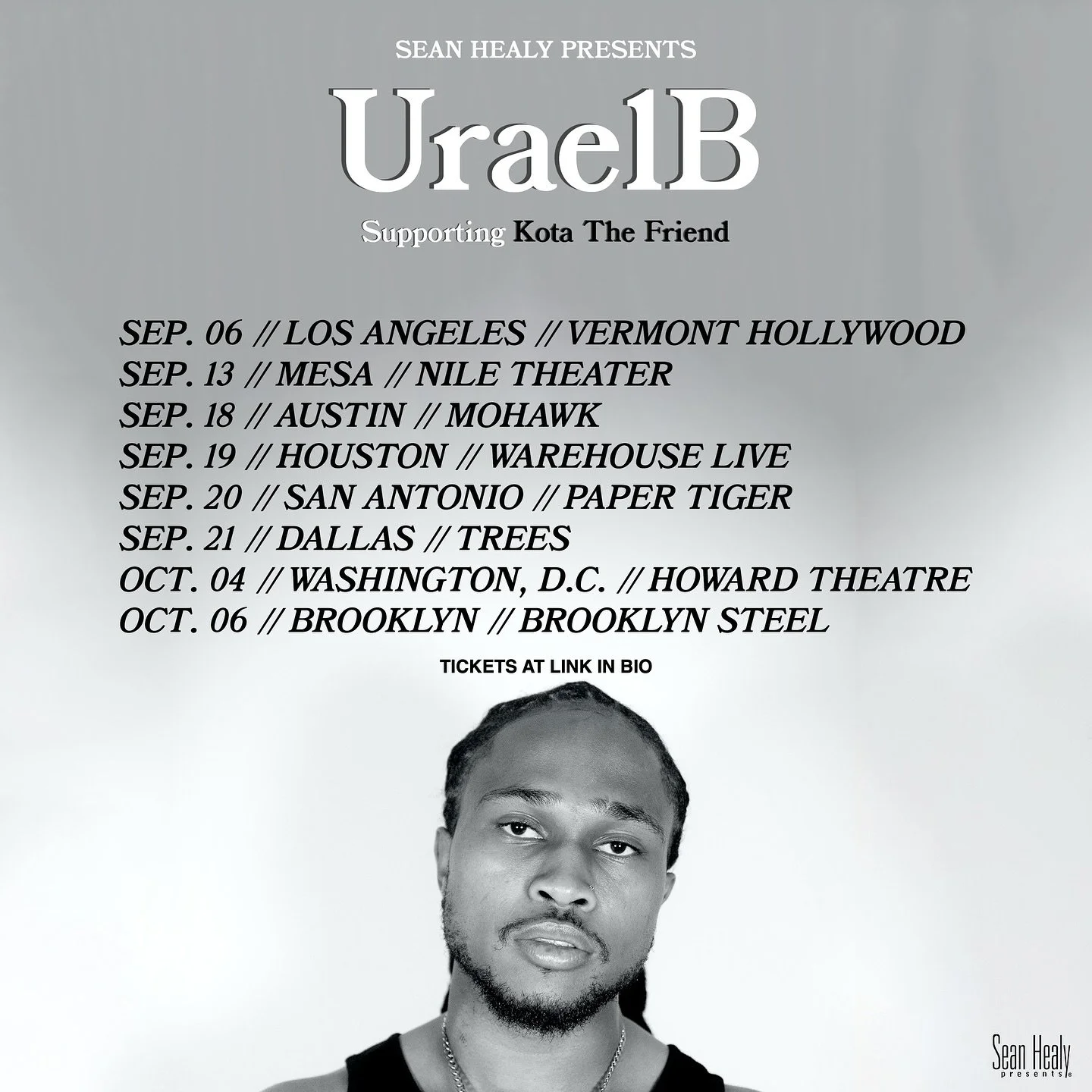
Official promotional artwork for the No Rap on Sundays Tour, shared ahead of UraelB's Los Angeles tour stop (2025).
Documenting an Artist Becoming—In Real Time
Archive Feature
By Crystani Freeman
Published
December 30, 2025
Artist
UraelB
Category
Case Study
Location
The Vermont Hollywood
Extending a Live Moment Into a Living Story
In September 2025, I documented UraelB’s Los Angeles tour stop for Kota the Friend’s No Rap On Sunday tour with a clear intention:
to treat one performance as the beginning of a story audiences could follow, not a moment that disappears once the night ends.
Instead of relying on a single highlight reel or recap post, the documentation unfolded over time, capturing performance energy, behind-the-scenes fragments, and real-time audience connection as they naturally happened.
This wasn’t about virality.
It was about documenting momentum, preserving context, and remaining present enough to capture the story as it unfolded.
The Context
UraelB is a Los Angeles–based artist. His performance during the No Rap On Sunday tour created the kind of moment Rhythm & Recap exists for — a chance to preserve early creative identity before the spotlight widens.
While many fans only experience an artist live once, or not at all, the goal was to create a space where both local and remote audiences could stay connected to his journey beyond the stage.
The guiding question was simple:
What does it look like to document an artist in motion, not just in performance?
The Approach
The rollout was designed to extend the life of the show across multiple touchpoints without overwhelming the audience or flattening the experience.
Pre-Show Momentum
Leading up to the performance, Story reposts created quiet context, amplifying UraelB’s RTR Vol. 2 listening party and the tour stop so audiences understood why this moment carried weight.
Live Documentation
During the show, real-time Stories held the energy exactly as it was — backstage movement, onstage momentum, and the small human moments in between.
The goal wasn’t perfection; it was presence.
Post-Show Storytelling
In the days and weeks after the performance, the story didn’t end. It unfolded.
• A behind-the-scenes reel capturing crowd energy, stage moments, and the way the room moved with him
• A quiet backstage interview where Urael reflected on what the night meant
• A Behind the Lyrics entry exploring the intention behind key lines in “Smart Guy”
• Moments spotlighting the band, crew, and Kota the Friend’s connection with fans
• Interactive Stories and polls that brought audiences back into the experience in real time
Each piece carried its own purpose.
Together, they formed continuity, becoming a living record of a night turning into memory.
The Result
One performance became an editorial record that continued long after the final song.
Instead of disappearing after the night ended, the coverage:
• Sustained audience engagement over time
• Gave new viewers a meaningful entry point into UraelB’s work
• Positioned him not just as a performer, but as a creative voice with depth and intention
More importantly, it allowed fans — whether they were in the room or watching from a distance — to feel connected to the journey as it unfolded.
What This Reinforced
This project reaffirmed something central to Rhythm & Recap’s philosophy:
Great storytelling isn’t about coverage.
It’s about connection.
When artists are documented with care before the breakout, their intentions, environments, and early creative decisions don’t get lost. They become part of the record — preserved, not rewritten.
Why This Matters for Rhythm & Recap
This case study reflects how Rhythm & Recap operates at its core:
• Documenting artists in motion during formation rather than after success
• Treating live performances as cultural moments, not content opportunities
• Creating pathways for audiences to follow artists across time, not just across platforms
It’s not about being first.
It’s about being early and being intentional.
Because when stories are documented with intention, they don't disappear after the performance—they become part of the record.
—
Crystani Freeman
Founder & Editor
Rhythm & Recap
Archive Highlights
• Live moments don’t have to disappear after the night ends
• Multi-format storytelling deepens connection across time
• Process-focused coverage builds fuller artist narratives
• Consistency matters more than virality
• Documentation becomes cultural record when done with care
🎥 Watch the Recap
Related Archive
Rhythm & Recap
Rhythm & Recap is an independent editorial archive documenting the people, communities, and conversations shaping music and culture.